Wiener Caféet - Stockholm, Sweden
The story of Wiener Café was, in many ways, also the story of two chefs whose careers took dramatically different paths.
Before Wiener Café, Björn Frantzén and Daniel Lindeberg were partners at the acclaimed restaurant Franzén & Lindeberg in Stockholm’s Gamla Stan. A documentary by Sweden’s national public broadcaster, SVT, famously captured the moment their ambitions diverged. In the middle of filming, the partnership came to an end. Frantzén made it clear that his goal was to become one of the world’s greatest chefs, while, according to Frantzén in the documentary, Lindeberg was unable to keep pace with those ambitions. From that point on, the two went their separate ways.
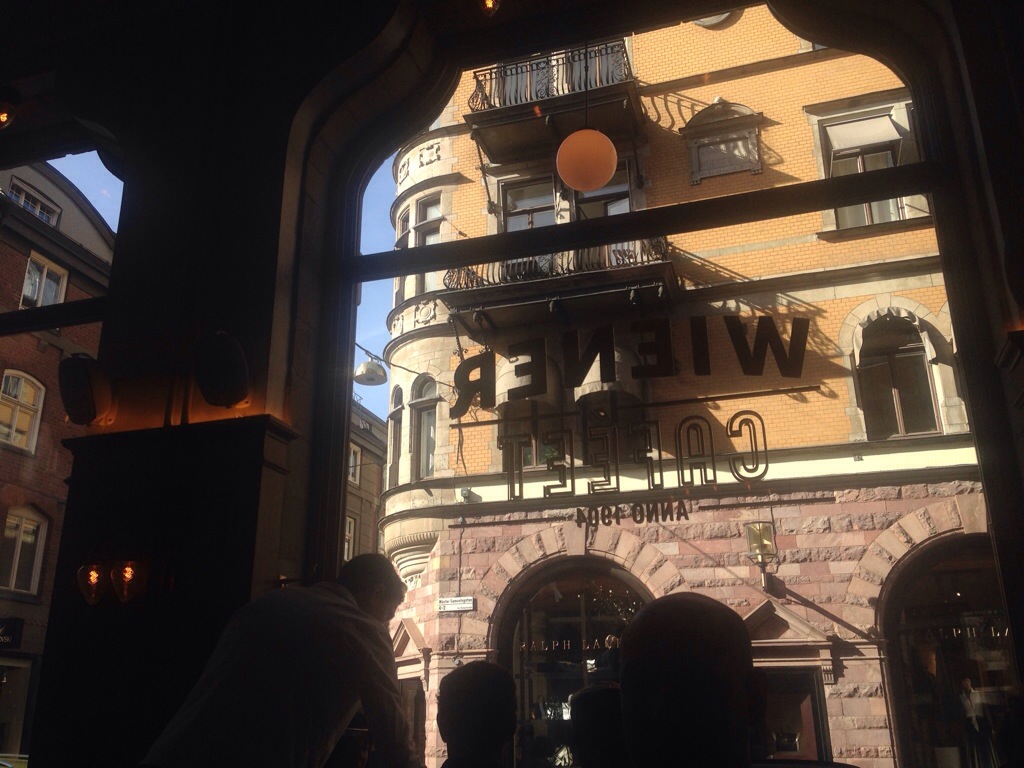
Lindeberg later took over the historic Wiener Café, attempting to transform the century-old institution into an elegant European-style coffee house. Frantzén, meanwhile, continued his relentless pursuit of culinary excellence. He went on to open Restaurant Frantzén, eventually earning the coveted three Michelin stars, and has since built an international restaurant empire.
Wiener Café itself had existed since 1904 under various owners before Lindeberg’s tenure. Less than a year before this review was originally written, the café had undergone a complete renovation and reopened as a modern high-end coffee house. Sadly, Wiener Café has since closed its doors at this location. The confectionery business later relocated to Orminge, outside Stockholm, while the original premises became home to a restaurant.
Back then, a waiter seated you at your table, and the staff were professional, attentive, and immaculately dressed in white uniforms. The premises were beautiful, retaining many original details that paid tribute to the café’s Viennese heritage. The display offered classical French tarts, Swedish cakes, and even American-inspired sweet delicacies. Everything was fairly expensive if you weren’t accustomed to downtown Stockholm prices, although, to be honest, it wasn’t outrageously priced compared with what many coffee chains charged for a latte.
If you appreciated elegant surroundings, proper table service, and the feeling that someone genuinely cared about you as a guest, this was the kind of place you sought out. Cafés like this were—and still are—rare in Sweden, and arguably in the United States as well, while remaining commonplace throughout much of Central and Eastern Europe. Italian coffee culture has always revolved around ordering quickly at the counter, whereas the French have continued to embrace the tradition of being served coffee at the table.
Enough with the atmosphere—the Food Emperor has always been about the sustenance. So how was the food?
Their own tea blend was quite pleasant, although it didn’t differ much from the many other “house blends” found at Sweden’s more ambitious coffee establishments. Cadierbaren at Stockholm’s Grand Hôtel had one, Vetekatten a few blocks away had one, and they all seemed to follow the same formula: a bit of citrus zest, a handful of fragrant flower petals, and very little to truly distinguish one from another.
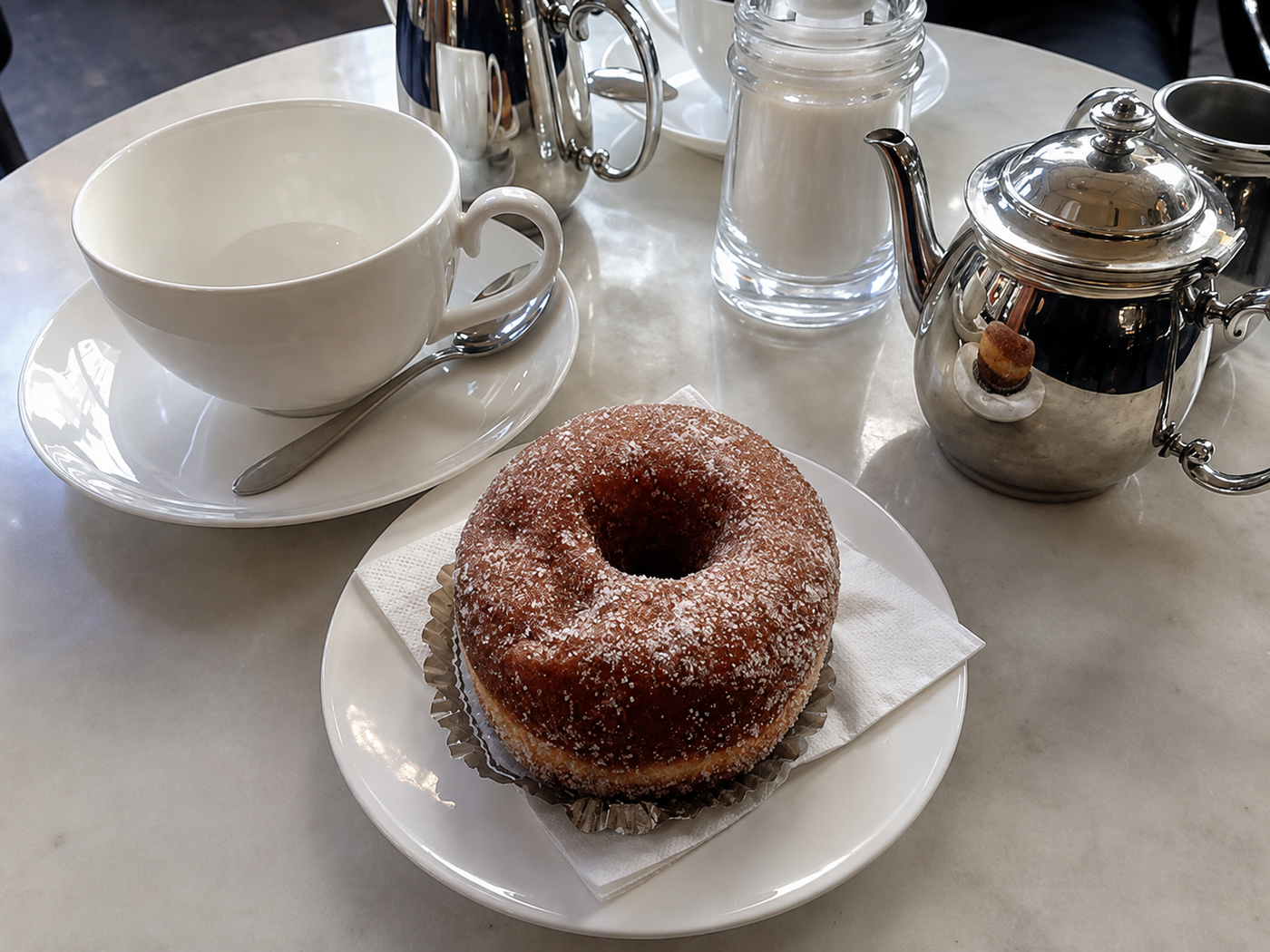
I ordered the signature doughnut, filled with vanilla custard. It was wonderfully flavoursome, with an excellent dough that showed real craftsmanship. Unfortunately, the whole thing felt rather heavy and lacked that magical quality of tasting as though it had just emerged from the fryer. And why? Because it probably hadn’t.
I don’t want to sound overly harsh. I genuinely appreciated the amount of work the bakers invested in producing such an impressive assortment of pastries. The problem was simply that everything looked slightly better than it tasted. Krispy Kreme, for all its faults as a global chain, serves astonishingly fresh original doughnuts. Yes, you heard me correctly—I actually preferred Krispy Kreme’s classic doughnut over this one.
At the time, I had planned to return for the British Afternoon Tea, the American breakfast, and the French breakfast, all of which were listed on the menu, and write a more thorough review. That follow-up never happened, and today it never will. Wiener Café has become another chapter in Stockholm’s restaurant history—a beautiful and ambitious project that ultimately proved to be as short-lived as the partnership that inspired it.